

Dropshipping in 2026 is not a passive income shortcut—it is a lean e-commerce model best used for product validation and brand building. Profitability depends on disciplined unit economics, supplier reliability, and marketing efficiency—not viral hacks.
When you are typing dropshipping in your search engine, then this is the answer you want to know: yes, dropshipping works in 2026, but it is not going to work as a hype-driven shortcut, it is going to be a well-organized business concept. It can work in the case of engineering of margins, data-led marketing, and proactive supplier risk.
What is Dropshipping?
Dropshipping is a way of selling products without handling inventory, storage, or shipping. Instead, you work with one or more third-party suppliers who ship products directly to customers on your behalf. The process of getting products to customers who place orders online is referred to as “ecommerce fulfillment,” and there are many ways of fulfilling online orders. Dropshipping is one.
What’s a Dropshipping Business Model?
A dropshipping business model is a retail fulfilment system where you sell products without holding inventory. When a customer places an order on your website, the supplier ships the product directly to the customer on your behalf.
You control branding, pricing, positioning, and customer experience. The supplier controls inventory and fulfillment. This structure lowers the barrier to entry because you do not invest heavily in bulk inventory upfront. However, it also reduces operational control.
To understand its position in ecommerce, compare it with other retail models:
| Factor | Traditional Ecommerce | Dropshipping | Print-on-Demand |
| Inventory Ownership | Yes | No | No |
| Upfront Capital | High | Low | Low |
| Margin Control | High | Medium | Medium |
| Shipping Speed Control | High | Low | Medium |
| Risk Level | Inventory Risk | Supplier Risk | Supplier Risk |
Dropshipping minimizes inventory risk but increases dependency on supplier reliability. That tradeoff defines the model’s strengths and weaknesses.
How Dropshipping Works?
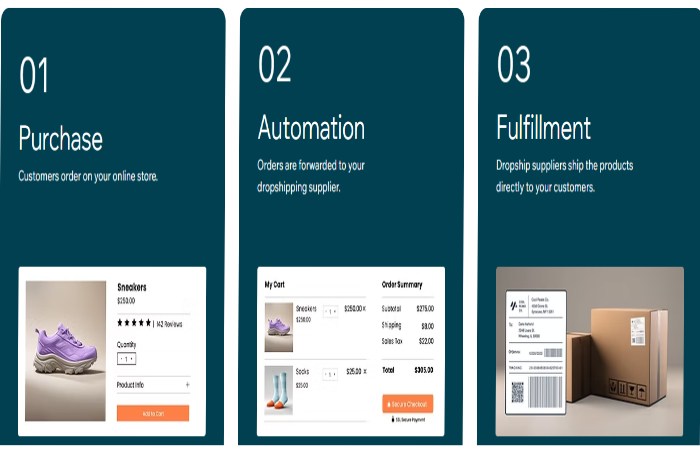
The operational flow is simple:
A customer purchases a product from your store. You receive payment. You forward the order details to your supplier. The supplier ships the product directly to the customer. You handle post-purchase support.
The simplicity of this flow often hides the financial complexity behind it.
Illustrative Example
Assume:
- Selling price: $60
- Supplier cost: $22
- Shipping: $6
- Payment fees: $3
- Customer acquisition cost (ads): $18
Total cost: $49
Net profit per order: $11
On paper, this appears profitable. But if ad costs increase slightly or refund rates rise, that $11 margin shrinks quickly. That is why experienced operators focus on contribution margin rather than product trends.
According to industry discussions from platforms like Shopify and BigCommerce, average ecommerce net margins often fall between 10–20%. Dropshipping frequently operates on the lower end unless optimized carefully.
How are Dropshipping orders fulfilled?
The Biggest Benefits of Dropshipping
- Dropshipping is a low-cost model: You can sell thousands of items, but you don’t have to spend any money until you receive customer payment. In addition to saving money on purchasing inventory, drop shippers do not need to invest in storage or rent.
- It’s easy to get started: Since products are handled by outside suppliers, it’s easy to go from zero to 60 with a dropshipping model. No product development, no storing inventory, just selling.
- Flexible expansion: Expanding an online store is as simple as adding new brands, sizes, and color options to the website. Testing new products is also a snap; if one product doesn’t sell, it can be removed and replaced with another.
How to Become a Drop Shipper?
- Find Dropshipping Products that are in Demand
- Choose a supplier that is right for you
- Select a Channel to Sell Your Products
- Create your Dropshipping Website
- Advertise and Sell Your Product(s) Online
- Prioritize Customer Service and Support
Dropshipping websites
A dropshipping website is your storefront. It is where branding, positioning, and conversion optimization occur.
The choice of platform impacts long-term flexibility and control.
| Platform | Ease of Setup | Customization | Traffic Source | Best For |
| Shopify | Very Easy | Moderate | External Ads/SEO | Beginners |
| WooCommerce | Moderate | High | External Ads/SEO | Flexible Stores |
| Amazon | Easy | Low | Built-in Traffic | Marketplace Sellers |
| eBay | Easy | Low | Built-in Traffic | Arbitrage Sellers |
Marketplaces offer traffic but limit branding control. Independent websites offer control but require marketing skill.
For sustainable growth, owning your domain and customer data provides long-term leverage.
Dropshipping App
A dropshipping app connects your store to suppliers and automates fulfillment. It can import products, synchronize inventory, and automatically transmit order details.
However, technology does not create profitability. It reduces friction.
There are four main categories of dropshipping apps:
|
App Type |
Purpose |
|
Supplier Marketplace Apps |
Connect to global suppliers |
| Print-on-Demand Apps | Custom merchandise fulfillment |
| Automation Tools | Order routing and tracking updates |
| Research Tools |
Product and demand validation |
Apps simplify logistics but cannot compensate for poor positioning or weak marketing. Many beginners rely on apps expecting them to generate profit. They do not. They simply support execution.
Is Dropshipping Profitable in 2026?
Yes, but selectively.
The environment has shifted due to:
- Increased digital ad competition
- Faster shipping expectations (influenced by Amazon Prime)
- Higher consumer awareness
Below is a simplified profitability matrix:
| Skill Level | Margin Strength | Likely Outcome |
| Low | Low | High failure risk |
| High | Low | Temporary wins |
| High | High | Sustainable growth |
| Medium | High | Gradual stability |
Profitability is less about saturation and more about margin engineering and marketing competence.
The Federal Trade Commission (FTC) in the US and consumer protection laws in the EU underline openness regarding the delivery time and refund. Compliance saves your business in conflict and fines.
When Dropshipping Stops Being Optimal
Dropshipping is excellent for testing products. It becomes less optimal when volume grows.
Signals it may be time to transition:
- Consistent sales volume
- Repeat purchase behavior
- Ability to negotiate bulk discounts
- Shipping speed impacting conversion
Transitioning to inventory increases margin control and shipping speed. It reduces dependency on supplier variability.
Global Dropshipping Market Comparison
| Factor | United States | European Union | India |
| Purchasing Power | High | High (varies by country) | Moderate (urban stronger) |
| Average Order Value | High | Medium–High | Low–Medium |
| Advertising Costs | High | Medium–High | Lower than US |
| Competition Level | Very High | High | High (marketplaces dominant) |
| Shipping Expectations | Very Fast (2–5 days expected) | Fast | Moderate tolerance |
| Logistics Infrastructure | Advanced | Advanced | Rapidly improving |
| Tax/Regulatory Complexity | State sales tax | VAT compliance | GST compliance |
| Return/Refund Risk | Moderate | Moderate | Higher (COD impact) |
| Best Strategic Fit | Higher-ticket niche brands | Localized niche brands | Price-sensitive, domestic supplier focus |
Types of Dropshipping Suppliers
| Supplier Type | Example Platforms | Shipping Speed | Margin Potential | Best For |
| Chinese Marketplaces | AliExpress, Alibaba | 7–20 days | High | Beginners testing products |
| Agent-Based Suppliers | Private sourcing agents | 5–12 days | Higher | Scaling stores |
| Print-on-Demand | Printful, Printify | 3–10 days | Medium | Custom-branded products |
| US/EU Warehouses | CJ Dropshipping (local stock), Spocket | 3–7 days | Medium | Faster delivery markets |
| Indian Suppliers | GlowRoad, BaapStore, IndiaMART | 3–8 days | Low–Medium | Domestic India market |
Dropshipping Suppliers in India
India requires a different approach due to COD culture, GST compliance, and price sensitivity.
| Region | Logistics Strength | Recommended Supplier Strategy | Risk Level |
| Mumbai (Maharashtra) | Strong courier network | Domestic warehouse suppliers | Low |
| Delhi NCR | Strong hub access | IndiaMART + private vendors | Medium |
| Bangalore (Karnataka) | Tech-friendly market | Branded niche suppliers | Low |
| Tier-2 Cities | Moderate | Low-ticket, COD-optimized products | Higher |
| Northeast India | Limited logistics | Avoid fragile/high-return items | High |
Risk Structure Overview
| Risk | Operational Impact | Strategic Response |
| Supplier stockouts | Order delays | Maintain backups |
| Shipping delays | Refunds/chargebacks | Transparent policies |
| Ad cost spikes | Margin collapse | Diversify channels |
| Platform bans | Revenue halt | Multi-channel presence |
| Cash flow gaps | Operational stress | Maintain reserves |
Entrepreneurship inherently includes volatility. Dropshipping amplifies it due to thin margins.
Helpful Resources
- How to sell online
- Seller registration guide
- Find profitable product ideas
- Source products
- Build an online store
- Fulfill orders
- Inventory management
- Manage your brand
Final Perspective
Dropshipping works when you treat it like a real retail business — not a shortcut to fast money. The model removes inventory risk, but it does not remove the need for research, supplier management, marketing skill, and customer service excellence.