

A successful home improvement business depends less on construction skill and more on systems—specialization, pricing discipline, lead generation, and customer trust mechanisms that turn one-off projects into repeatable revenue.
If you are searching for “home improvement business,” you likely want one of two things:
- How to start one, or
- How to grow one without chaos.
You build a profitable home improvement business by choosing a focused service, pricing for true costs (not just labor), creating a predictable lead system, and standardizing operations so projects run consistently. Tools matter. Skill matters. But systems determine survival.
What Is a Home Improvement Business?
A home improvement business provides services that upgrade, repair, or enhance residential properties. It can range from solo operators to multi-crew regional companies.
Core Service Categories
| Service Category | Examples | Skill Level | Margin Potential | Scalability |
| Interior Remodeling | Kitchens, bathrooms, flooring | High | High | High |
| Exterior Improvements | Roofing, siding, windows | Medium–High | Medium–High | Medium |
| Finishing Services | Painting, drywall, tiling | Medium | Medium | High |
| Structural Work | Decks, extensions | High | High | Medium |
| Maintenance Services | Handyman, seasonal upkeep | Low–Medium | Medium | High (recurring) |
POV Insight: The businesses that scale fastest typically specialize in 1–2 services and systemize delivery.
Services and Pricing Overview
Pricing varies widely by country, materials, labor cost, and complexity. The numbers below are illustrative ranges, not fixed market rates.
Interior Remodeling Pricing
| Service | US (USD) | UK (GBP) | India (INR) | Australia (AUD) |
| Bathroom Remodel | $8,000–$25,000 | £6,000–£18,000 | ₹2L–₹8L | A$10,000–A$35,000 |
| Kitchen Remodel | $15,000–$60,000 | £10,000–£40,000 | ₹4L–₹15L | A$20,000–A$70,000 |
| Flooring (per sq ft) | $3–$12 | £20–£80 per m² | ₹60–₹300 per sq ft | A$40–A$150 per m² |
Exterior Services Pricing
| Service | US | UK | India | Australia |
| Roof Replacement | $5,000–$20,000 | £4,000–£15,000 | ₹1.5L–₹6L | A$8,000–A$25,000 |
| Exterior Painting | $2,500–$8,000 | £2,000–£6,000 | ₹50k–₹2L | A$4,000–A$15,000 |
| Window Replacement (per unit) | $300–$1,200 | £250–£900 | ₹8k–₹30k | A$500–A$2,000 |
Important: These ranges reflect project averages reported by industry sources like the National Association of Home Builders and remodeling cost surveys. Always calculate regionally.
Country-Wise Market Snapshot
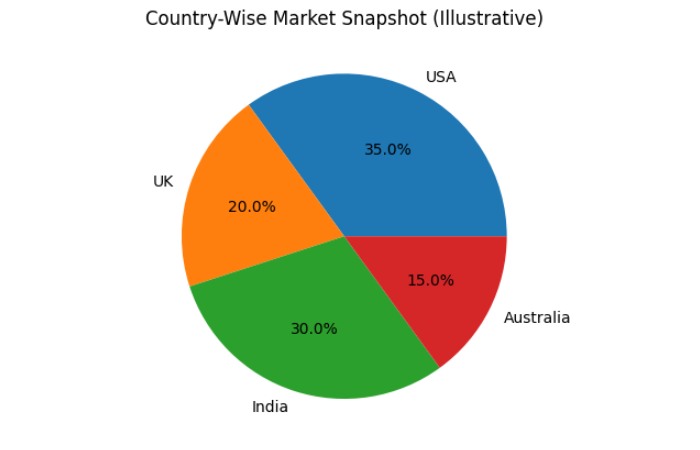
Demand and regulation differ across countries.
United States
- Strong remodeling demand (aging housing stock).
- Licensing required in most states.
- Organizations: National Association of Home Builders, Joint Center for Housing Studies of Harvard University
- Competitive but high revenue potential.
United Kingdom
- Certification often required for electrical/plumbing.
- Trade associations like Federation of Master Builders build trust.
- High emphasis on workmanship and guarantees.
India
- Fast-growing urban demand.
- Licensing requirements vary by municipality.
- Price sensitivity higher; margins depend on positioning.
- Growing demand for modular kitchens and renovations.
Australia
- Strict building codes and licensing.
- Strong focus on safety and compliance.
- Premium pricing possible for high-quality work.
| Country | Regulation Level | Price Sensitivity | Growth Potential |
| USA | High | Medium | High |
| UK | Medium–High | Medium | Medium–High |
| India | Variable | High | Very High |
| Australia | High | Medium | Medium |
Customer Reviews: What Actually Drives Ratings?
In home improvement, reviews are a revenue engine.
Review
| Factor | Impact on Rating | Why It Matters |
| Communication | Very High | Reduces anxiety |
| Timeliness | High | Projects disrupt life |
| Cleanliness | High | Visible professionalism |
| Transparency | Very High | Prevents disputes |
| Warranty | Medium–High | Trust builder |
Most 5-star reviews mention professionalism and communication—not technical details.
Pricing for Sustainable Profit
Many new contractors price only materials and labor. That is dangerous.
True Cost Structure
| Cost Component | Included by Beginners? | Must Include? |
| Materials | Yes | Yes |
| Labor | Yes | Yes |
| Fuel & Transport | Often No | Yes |
| Marketing | Often No | Yes |
| Insurance | Sometimes | Yes |
| Admin Costs | Rarely | Yes |
| Profit Margin | Forgotten | Yes |
Illustrative Example:
Bathroom remodel priced at $12,000.
If overhead is 20% and profit target is 15%, but ignored in quote, the business silently loses thousands annually.
Operations That Enable Scaling
Demand is not the constraint—execution is.
Core Operational Systems
| Area | System Needed | Result |
| Estimating | Standard templates | Faster quotes |
| Scheduling | Capacity tracking | No overbooking |
| Procurement | Supplier contracts | Better margins |
| Quality Control | Final checklist | Fewer callbacks |
| CRM System | Lead tracking | Higher conversion |
Without systems, growth increases chaos.
Services That Add Recurring Revenue
Project-only revenue causes instability.
Recurring Service Ideas
| Service | Frequency | Benefit |
| Annual Home Inspection | Yearly | Repeat income |
| Gutter Cleaning | Seasonal | Upsell pathway |
| Exterior Maintenance | Biannual | Relationship building |
| HVAC Servicing | Annual | Cross-selling |
Recurring services increase predictability.
Hiring and Team Structure
Growth requires delegation.
Growth Stages
| Stage | Team Structure | Revenue Risk |
| Solo | Owner only | High burnout |
| Small Crew | 2–5 workers | Owner bottleneck |
| Multi-Crew | Project managers | Higher stability |
| Regional Brand | Dedicated sales + ops | Scalable |
The turning point is moving from “worker-owner” to “operator.”
Common Failure Patterns
| Failure Mode | Early Warning | Prevention |
| Cash Flow Crisis | Delayed payroll | Build reserves |
| Overexpansion | Too many jobs | Limit capacity |
| Reputation Damage | Poor reviews | Improve communication |
| Legal Trouble | Permit violations | Compliance audits |
Example Service Portfolio
| Service Tier | Example Services | Pricing Strategy | Target Market |
| Basic | Painting, repairs | Competitive | Budget clients |
| Mid-Tier | Bathrooms, flooring | Value-based | Middle-income |
| Premium | Kitchen redesign, smart homes | Premium pricing | High-income |
This tiered approach allows upselling without changing core operations.
Future Trends
- Energy efficiency retrofits
- Aging-in-place upgrades
- Smart home installations
- Modular renovation kits
- AI-based estimating tools
Contractors who integrate technology and financing options will outperform.
Final Thoughts
A home improvement business is not simply about building or repairing homes; it is about creating a repeatable service model that delivers consistent results and predictable income. The most successful companies focus on a clear specialization, allowing them to market effectively and operate efficiently rather than trying to do everything for everyone. They price their services correctly to cover true costs and ensure sustainable profit